
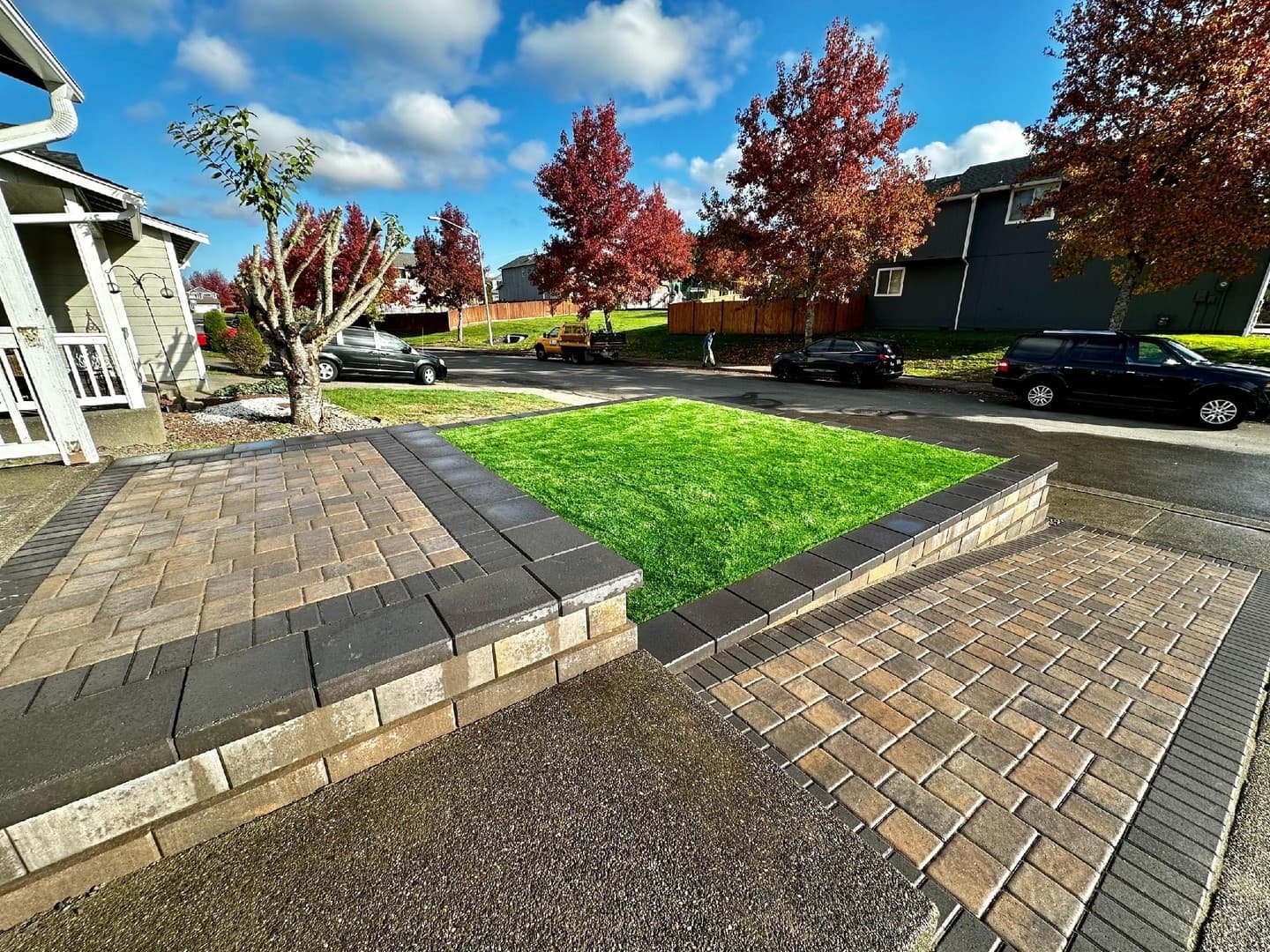
Polymeric sand is joint sand mixed with a binder that hardens after it is wetted, locking pavers together and resisting washout, weeds, and ants. In Western Washington it fails mainly from rain during curing, shallow joints, and a wet base. ND Brick Pavers installs and re-sands joints for patios and driveways across Tacoma and Pierce County, and the rules below are how we avoid those failures.
That is the definition. The rest of this article is the part the bag does not explain well: how polymeric sand behaves in a climate where dry weather windows are short, what haze is and how to avoid it, and when joints need to be redone.
What is polymeric sand, and how is it different from regular joint sand?
Regular joint sand is a fine, dry sand swept into the gaps between pavers. It does a real structural job: it transfers load from one paver to the next so the whole field acts as one surface. Its weakness is that it is loose. Rain, wind, pressure washers, and ants move it, and once a joint empties, pavers start to rock.
Polymeric sand is the same idea with a binder added. You sweep it in dry, compact it so it settles to full depth, and then mist it with water. The water activates the binder, and as it dries the joint firms up. A properly set joint is firm but not rigid like mortar. It can flex a little with the field, and manufacturers describe it as permeable to water so the base can still drain.
One manufacturer data sheet we reviewed is direct about a point most homeowners miss: a drainage base is required so the joints do not stay saturated. Polymeric sand is a joint product. It cannot fix a base that holds water.
How much dry weather does polymeric sand need?
This is the question that matters most in the Puget Sound region, and the answer is on the product label, not in a general rule. Brands differ.
As an example, Sika's Evolution Pro data sheet says:
- Do not install if rain is expected within 24 hours, or within 48 hours for joints wider than half an inch.
- Protect the joints from rain for at least 24 hours after application, or 48 hours for the wider joints.
- Install only when air and surface temperature are between 41 and 95 degrees Fahrenheit.
- Expect longer drying when temperatures stay below 70 degrees for the first one to three days.
Read that last line again with a Tacoma October in mind. Many days do not reach 70 degrees for months. That does not mean polymeric sand cannot be installed outside summer. It means the cure window stretches, and a forecast that looks dry for one afternoon is not the same as a dry cure.
Some products advertise that they are "rain safe" within minutes or a couple of hours. Treat that as protection against a surprise shower, not a plan. We schedule joint work around the longest window the product allows, not the shortest.
Why does polymeric sand fail in the rain?
There are four common failure modes, and only one of them is really about the rain itself.
1. Rain before the binder sets. Heavy rain on fresh sand can wash binder out of the top of the joint or even float sand out of it. The joint dries soft and crumbly, or it develops a crust on top with loose sand underneath. That crust cracks and lifts out within a season.
2. Wet pavers at install. The surface and joints must be completely dry before the sand goes down. Pine Hall Brick, a paver manufacturer, warns that pavers are porous and can hold moisture even when they look dry. Damp joints activate the binder early, so the sand sticks halfway down the joint instead of filling it. Damp paver faces grab dust and binder, which becomes haze.
3. Shallow joints. The same Sika sheet says that on a re-sand, the old sand comes out to full joint depth, or at least one and a half inches, and the new sand fills the joint to full depth, leaving about an eighth of an inch below the paver chamfer. A thin skim of polymeric sand over old sand will not hold. This is a common reason a DIY re-sand fails in its first winter.
4. A base that stays wet. If water sits in the bedding layer, the joints above it stay saturated. Manufacturers say joints may soften when saturated and harden again after drying. On a base that never dries out between November and April, they never harden. That is a drainage defect showing up in the joints.
What causes polymeric sand haze, and can it be removed?
Haze is a whitish or gray film on the paver faces after the sand is activated. In our experience it almost always comes from binder or fine dust left on the surface when the water goes on. The water dissolves that residue, it spreads across the paver face, and it dries there as a film.
Prevention is simple and tedious:
- Sweep the surface clean with a stiff broom, then a soft broom.
- Finish with a leaf blower held low and flat to remove the last fine dust.
- Mist, do not flood. A strong stream or large droplets can wash binder out of the joint and onto the pavers.
- Work in sections small enough that you can wet each one evenly.
Removing haze after it cures is harder. Some light haze wears off with weather and foot traffic. Heavier haze may need a cleaner made for polymeric residue, and the right cleaner depends on the sand brand. Test any cleaner on a small hidden area first, because some acidic cleaners can change the color of concrete pavers.
Haze and efflorescence are different things. Efflorescence is a white, powdery salt deposit that comes out of the concrete itself, often on new pavers in their first wet season. It can show up whether or not polymeric sand was used.
When do paver joints need re-sanding?
Look for these signs:
- You can push a screwdriver or key into the joint with little effort.
- Sand is washing onto the surface after rain, or collecting at low edges.
- Pavers rock or click when you step on them.
- Weeds or moss are rooted down into the joints, not just sitting on top.
- Ant mounds of fine sand appear along joint lines.
One rocking paver usually means a joint problem. A whole area that rocks, or a low spot that holds water, usually means a base problem. Re-sanding will not fix the second one.
How do you re-sand pavers with polymeric sand the right way?
This is the sequence our crews follow on a re-sand job. The order matters more than the brand.
- Clean out the old joint material to the depth the new product requires. Hardened polymeric sand has to come out; new sand will not bond to it.
- Clean the surface. Remove moss, weeds, and organic debris from the joints and faces.
- Let everything dry completely. In our climate this is often the longest step. A surface that was washed yesterday is rarely dry enough today in October.
- Check the forecast against the label. If the window is not long enough, wait.
- Sweep sand in, compact, and repeat. A plate compactor with a protective pad, or a rubber mallet on small areas, settles the sand to full depth. Top off and compact again until the joints stay full.
- Clean the faces completely. Broom, soft broom, then blower.
- Activate with a gentle mist in the pattern the manufacturer describes.
- Keep traffic, sprinklers, and downspout flow off for the cure period on the label.
If you plan to seal, the sealer has its own timing. The Sika sheet we reviewed says to wait at least 30 days after the polymeric sand install before applying sealer. Some sealers are designed to stabilize regular joint sand instead, which is a different approach. Pick one system and follow it.
Is polymeric sand right for every paver surface?
No. A few cases where we slow down:
- Permeable pavers. These use open-graded stone in wider joints so water can pass through. Filling them with polymeric sand defeats the purpose.
- Very wide joints or natural stone with irregular gaps. Some products are rated for wide joints, and some are not. Check the maximum joint width on the label.
- Pavers over a concrete slab without drainage. If water cannot leave the bedding layer, the joints stay wet and soft.
- Steep slopes. Surface water can run along the joints before the binder sets. A small test area first is worth the time.
For most standard patios, walkways, and driveways on a well-drained base, polymeric sand is the right joint material in this region. It just has to be installed like it rains here, because it does.
What should you ask a contractor about joint sand?
Whether you hire ND Brick Pavers or someone else, ask:
- Which joint sand product will you use, and what dry window does its label require?
- How do you make sure the pavers are dry before you start?
- How deep will you clean out the old joints on a re-sand?
- How do you prevent haze?
- What happens if it rains before the cure window ends?
- Is my base draining, or are we re-sanding over a wet base?
A good answer to the last question is worth more than any brand of sand. If you are not sure whether your joints or your base are the problem, a site visit and free soil test from our crew will tell you which one you are dealing with before you spend money on either.
Sources
- Sika Canada: Evolution Pro Polymeric Sand product data sheet (PDF)
- Pine Hall Brick: Tips for working with polymeric sand
Frequently Asked Questions
How long does polymeric sand need to stay dry?
Follow the data sheet on the bag, because brands differ. One major manufacturer says not to install if rain is expected within 24 hours, or 48 hours for joints wider than half an inch, and to protect the joints for the same period after the final wetting. Cool weather slows the set, so in a Western Washington spring or fall we plan for the longer end of whatever the label says.
What happens if it rains right after polymeric sand is installed?
A light shower after the binder has started to set usually does little harm. Heavy rain before the set can wash binder out of the joints, leave a soft or crumbly joint, and carry a film of binder onto the paver faces that dries as haze. If it rains early, let the surface dry fully and check the joints. Soft joints that do not harden after drying usually need to be removed and refilled.
Can you put new polymeric sand over old polymeric sand?
Not as a top-up. Polymeric sand needs to fill the joint to full depth to bind properly, and a thin layer over old, hardened sand will not bond to it and tends to flake out. The old sand has to come out to the depth the manufacturer specifies, the pavers need to be dry, and then the joints are refilled and activated as a new install.
Why are my polymeric sand joints soft in winter?
Polymeric sand joints can soften when they are saturated and then harden again as they dry. That is normal in our wet season. Joints that stay soft all the time usually mean the base under them holds water, the sand was not compacted into the joint, or the joints were filled too shallow. Constant softness is a drainage question before it is a sand question.
Does polymeric sand stop moss and weeds?
It slows them down. A full, hard joint gives weed seed and moss spores less loose material to root in, and ants have a harder time digging. It does not stop moss growing on the paver faces in shade, and organic debris that settles on top of the joints will eventually support growth. It is one part of a maintenance plan, not a permanent fix.
How long does polymeric sand last?
There is no honest single number. Joints on a well-drained base, out of the path of downspouts and pressure washers, can stay tight for years. Joints on a base that stays wet, in heavy shade, or that get blasted with a pressure washer wear out much faster. When you can push a screwdriver into the joint easily or see sand washing onto the surface, it is time to re-sand.